

Only in Vietnamese
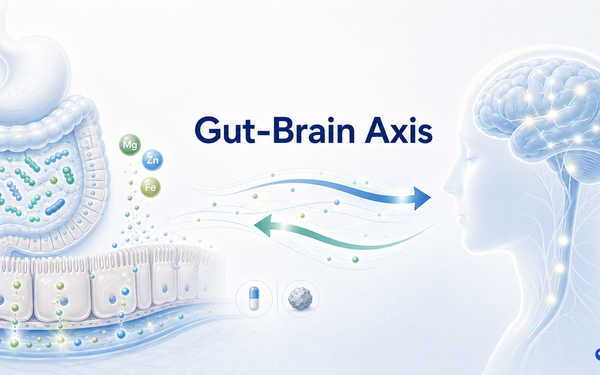
Gut-brain axis: tại sao hấp thụ vi chất phụ thuộc tiêu hóa
Đường ruột khỏe mạnh quyết định bao nhiêu % vi chất bạn hấp thụ. Hiểu gut-brain axis, vai trò probiotic và tại sao dạng chelate vượt trội khi tiêu hóa yếu.
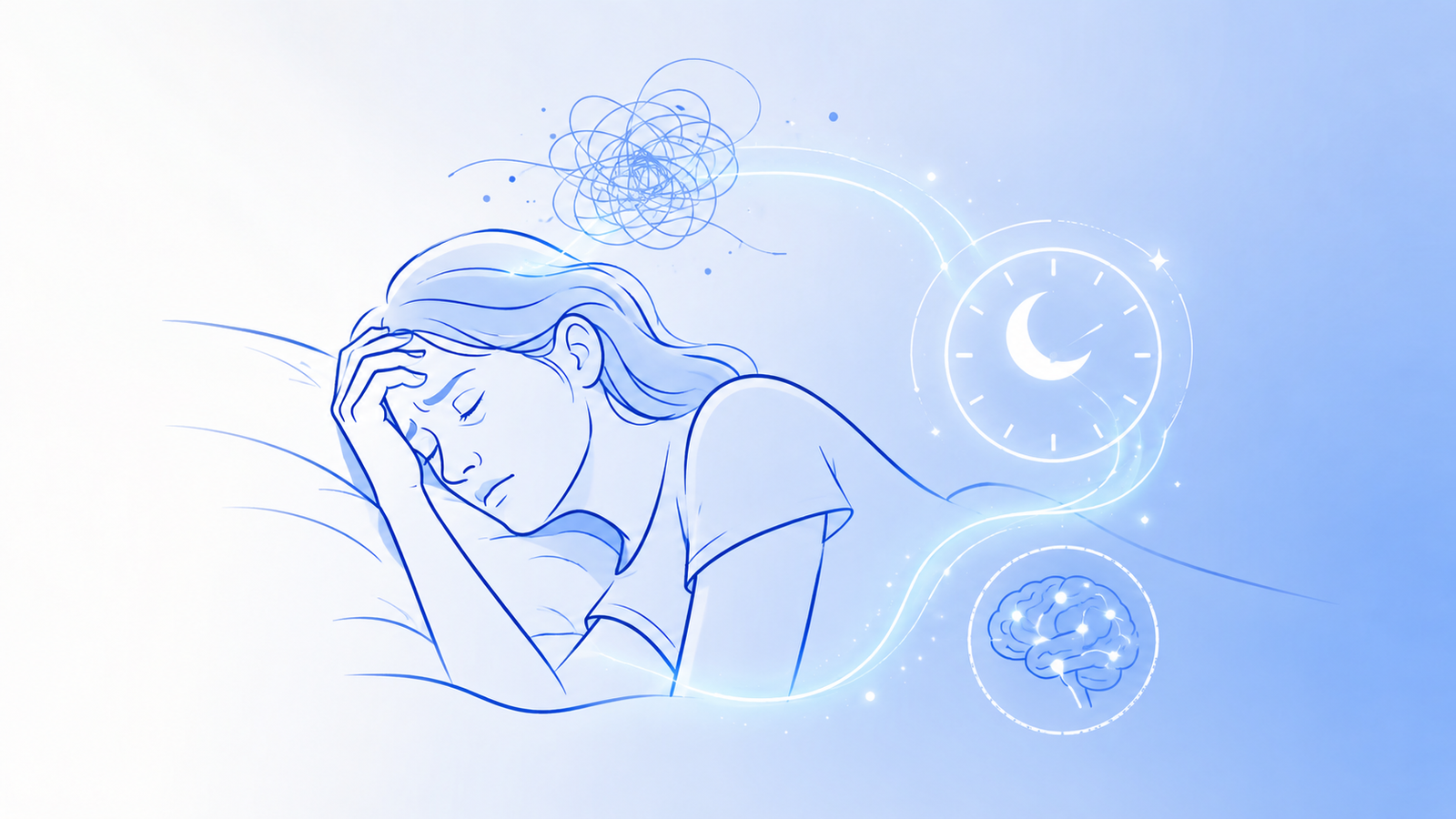
Have you ever gone to bed at 11 pm, closed your eyes, and had absolutely nothing happen?
Your body is genuinely tired. You skipped coffee after noon. The evening was low-key. Your phone has been across the room. And yet your mind keeps running — fragmented thoughts with no beginning or end, shapeless anxieties that refuse to be named.
Or maybe this scenario is more familiar: you do fall asleep, but wake up at 2 am. No reason. Your heart is beating a little too fast. A cramp begins to form in your calf. You turn over, stare at the ceiling, wait for sleep to return — and wait until the sky turns grey.
You get up the next morning feeling unrested, even though you were in bed by 11. You blame stress. The weather. Getting older.
But the real culprit may be far simpler than any of that.
Before we get to causes, take a look at this list of symptoms that many people live with daily without realising they're connected:
If two or more of these sound familiar, it's not a coincidence. Together, they form the classic symptom picture of something surprisingly widespread: magnesium deficiency.
Magnesium is involved in more than 600 enzyme reactions in the human body. Nearly everything your body does — from muscle contraction to protein synthesis to energy production — requires magnesium. But its most critical role for sleep sits in the nervous system.
Inside the brain, there's a type of receptor called the NMDA receptor — a channel that allows calcium to enter nerve cells when triggered by glutamate, the brain's primary excitatory neurotransmitter. When the brain is overstimulated — by stress, anxiety, or an environment saturated with information — glutamate activates these receptors and calcium floods in, keeping the brain in a state of alert and arousal.
Magnesium is what naturally blocks this channel.
Think of magnesium as a cork sitting inside the NMDA receptor. When your body has sufficient magnesium, the cork stays in place — preventing excess calcium from entering nerve cells, allowing the brain to shift from wakefulness into rest. When magnesium runs low, the cork pops out — calcium keeps pouring in, neurons keep firing — and your brain simply cannot switch off, no matter how drained your body feels.
That's why you can be completely exhausted and still unable to sleep.
Magnesium deficiency doesn't just wreck your sleep. It creates a self-reinforcing cycle:
Poor sleep → cortisol rises → more stress → more magnesium lost through the kidneys → deeper deficiency → worse sleep.
Cortisol — the stress hormone — signals the kidneys to excrete magnesium in urine. That means every stressful day, every night of poor sleep, your body loses another increment of magnesium. If your diet doesn't replace it, the gap between what you need and what you have quietly widens.
Then, after a night of cramps and restlessness, you reach for coffee to function. Caffeine prompts the kidneys to flush out even more magnesium. The cycle continues.
The recommended daily intake of magnesium for adults is 310–420 mg. Studies indicate that 60–70% of the global population doesn't consistently meet this threshold.
The reasons run deeper than just diet:
Modern diets are naturally low in magnesium. Dark leafy greens, legumes, nuts, seeds, and whole grains are the richest sources. But modern eating patterns — refined grains, processed foods, fast food — deliver very little. White rice milling alone strips away 80–90% of magnesium compared to brown rice.
Agricultural soils are increasingly depleted. Synthetic fertilisers supply the nitrogen, phosphorus, and potassium that plants need to grow — but don't replenish magnesium or trace minerals. Produce grown on mineral-depleted soil contains less magnesium than it did a generation ago.
Stress and late nights flush magnesium through the kidneys. Every time the body releases adrenaline or cortisol — in response to pressure, a deadline, conflict, or even the ambient anxiety of lying awake — the kidneys increase magnesium excretion.
Coffee, alcohol, and certain medications all act as magnesium "pumps", pulling the mineral out of the body. Proton pump inhibitors (for acid reflux), loop diuretics, and certain antibiotics all impair the kidneys' ability to retain magnesium.
Here's an important paradox: you can be seriously magnesium deficient and still receive a "normal" result on a standard blood test.
The reason is that only about 1% of total body magnesium circulates in the blood. Roughly 70% is stored in bones, and 20% in soft tissue and muscle. When tissue magnesium begins to deplete, the body borrows from bone to keep blood levels stable — because critically low blood magnesium is an immediate danger.
The result is that blood tests can appear normal for years while your muscles, nervous system, and heart are all operating under chronic magnesium shortage.
You don't need to wait for an abnormal lab result before taking action. Your symptoms are the most reliable signal you have.
Go back to the symptom list at the top of this article. None of those are simply "normal when you're busy" or "inevitable with age."
Nighttime leg cramps happen because magnesium is what allows muscle fibres to relax after each contraction. Without enough magnesium, muscles can't fully release — and a cramp is the result. The unsettled heartbeat at night happens because magnesium regulates the electrical potential of cardiac cells. The mind that won't switch off happens because NMDA receptors have no magnesium plug to dampen neural excitability.
These symptoms can improve. But the first step is recognising that the body is missing something specific — not simply that it needs "more rest."
Magnesium is not a sleeping pill. It doesn't cause drowsiness the way melatonin or sedatives do. It works at a more fundamental level — restoring the physiological conditions the body needs to naturally enter sleep on its own.
And because magnesium deficiency develops gradually over time, replenishment also takes time. Most people notice a meaningful difference after one to two weeks of consistent supplementation — not after a single night.
That doesn't mean the solution is complicated. It means you need to understand the problem correctly before you can address it correctly.
If you recognise yourself in this article — staring at the ceiling, cramping in the night, waking up tired — this is the moment to ask: what is my body actually missing?
The answer may be simpler than you think.
Đường ruột khỏe mạnh quyết định bao nhiêu % vi chất bạn hấp thụ. Hiểu gut-brain axis, vai trò probiotic và tại sao dạng chelate vượt trội khi tiêu hóa yếu.
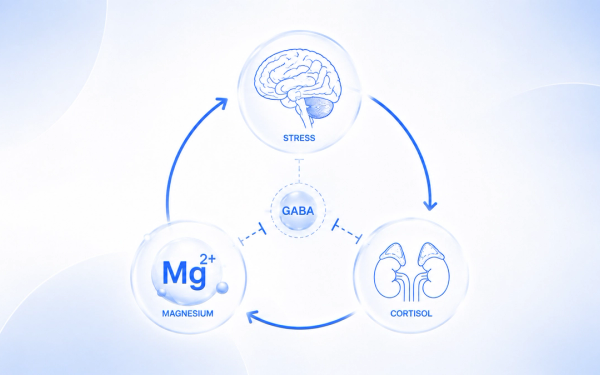
Stress mãn tính làm cơ thể tiêu thụ Magie nhanh gấp đôi. Hiểu cơ chế cortisol - GABA - Magie để giải thích tại sao căng thẳng kéo dài gây thiếu khoáng chất.

Mất ngủ khi mang thai không chỉ do bụng lớn hay đi tiểu đêm. Thiếu Magie và Vitamin D là hai yếu tố ít được nhắc tới nhưng có cơ chế rõ ràng. Bài này giải thích tại sao giấc ngủ thai kỳ bị phá vỡ, hai vi chất này liên quan thế nào, và giới hạn liều an toàn cần biết trước khi bổ sung.