You have tried everything: acne creams, laser therapy, chemical peels, even antibiotics. Your skin clears up for a few weeks, then the breakouts return — same spots, same angry inflammation, same frustration. This is the defining feature of hormonal acne: its origin is not on the surface of the skin but deeper, at the level of hormones and metabolism.
Understanding the mechanism beneath the surface is the first step to breaking the cycle.
How Is Hormonal Acne Different From Regular Acne?
Hormonal acne tends to appear on a cycle — most visibly along the chin, around the mouth, and on both sides of the jaw. These are the areas of the face with the highest density of androgen receptors.
The biochemical cascade unfolds like this:
When androgen levels rise — testosterone and DHT — due to the menstrual cycle, polycystic ovary syndrome (PCOS), chronic stress, or insulin resistance, the sebaceous glands are driven to produce more sebum. Pores become blocked, creating an anaerobic environment where Cutibacterium acnes thrives, triggering an inflammatory response.
The key driver is IGF-1 (Insulin-like Growth Factor-1) — a growth-signaling molecule activated by two converging pathways: a high-glycemic diet and directly from hormonal imbalance. IGF-1 stimulates androgen synthesis, promotes sebocyte proliferation, and suppresses FoxO1 — a regulatory protein that normally acts as a "brake" on the sebaceous glands.
In plain terms: hormonal acne is the result of multiple internal signals converging, and the skin is simply where the final signal shows up.
How Does Diet Influence Hormonal Acne?
A systematic review published in JAAD International (2022) analyzed decades of research and identified three dietary categories with clear associations to acne severity:
High-glycemic index (High-GI) foods: White bread, white rice, sweets, sugary drinks → rapid insulin spike → IGF-1 rises in response → sebaceous glands go into overdrive. A randomized controlled trial (RCT) found that after just 2 weeks on a low-GI diet, IGF-1 concentrations fell significantly in participants with moderate-to-severe acne.
Dairy and dairy-derived products: Milk proteins — particularly casein and whey — raise both insulin and IGF-1 through mechanisms independent of glycemic index. Whey protein has a high insulin index disproportionate to its GI, while casein is a potent IGF-1 stimulator. This explains why many people who reduce sugar still break out when they drink milk or use whey protein supplements.
Trans fats and excess omega-6: Repeatedly reheated industrial cooking oils, deep-fried foods, ultra-processed snacks → systemic inflammation → amplified inflammatory response inside hair follicles.
Which Micronutrients Have the Strongest Clinical Evidence?
Zinc — the most studied micronutrient for acne
A systematic review and meta-analysis published in Dermatologic Therapy (2020) pooled data from multiple RCTs and reached a clear finding: people with acne have significantly lower serum zinc concentrations than people with clear skin.
Zinc acts on acne through several simultaneous mechanisms:
- Antimicrobial: Inhibits the growth of C. acnes and reduces its adhesion to skin cells
- Anti-inflammatory: Suppresses the NF-κB pathway and reduces pro-inflammatory cytokines (IL-1β, TNF-α)
- Androgen regulation: Zinc inhibits 5α-reductase — the enzyme that converts testosterone into DHT (the more potent androgen that directly stimulates sebaceous glands)
- Sebum reduction: Zinc directly modulates sebaceous gland activity
On dosage: a French RCT comparing oral zinc gluconate at 30 mg elemental zinc per day versus minocycline over 12 weeks found both effective, though the antibiotic had a faster onset in early weeks. Studies using higher loading doses (60 mg/day for the first 3 weeks) reported greater improvement rates but also more gastrointestinal side effects.
Note: Zinc bisglycinate has higher bioavailability than zinc sulfate or zinc oxide, causes fewer digestive side effects, and is better suited for long-term use.
Vitamin D — immune hormone and skin regulator
Vitamin D is far more than a bone vitamin. It is a hormone with receptors (VDR) expressed on nearly every cell in the body — including sebocytes and keratinocytes in the skin.
A meta-analysis published in the JEADV (2021) pooled data from 8 studies and concluded: mean serum 25(OH)D concentrations in acne patients were 7.66 ng/mL lower than in controls — a statistically significant difference. Individual studies reported mean levels in the acne group as low as 11.2 ng/mL, well within the severely deficient range (below 20 ng/mL).
How vitamin D works in acne:
- Immune modulation: Vitamin D activates cathelicidin (the skin's natural antimicrobial peptide) and regulates local inflammatory responses
- Cell proliferation control: Vitamin D suppresses excessive keratinocyte proliferation — one of the mechanisms behind pore blockage
- Link to androgens: In women with PCOS, vitamin D deficiency frequently coexists with insulin resistance and elevated androgens — a self-reinforcing cycle that requires intervention on both fronts
- Comedolytic properties: Vitamin D may reduce the formation of comedones (blocked pores)
Omega-3 (EPA/DHA) — controlling inflammation at the source
Hormonal acne is fundamentally an inflammatory condition — and omega-3 fatty acids are among the few micronutrients with clinical trial data supporting whole-body inflammation control.
A cross-sectional study of 100 acne patients in Germany (2024, PMC11050840) found that omega-3 index scores were significantly lower in the acne group compared to clear-skinned controls, with the degree of deficiency correlating with acne severity.
How EPA and DHA work:
- Lowering IGF-1: EPA and DHA reduce circulating IGF-1 concentrations — directly targeting the central pathway of hormonal acne
- Competing in the inflammatory cascade: EPA competes with arachidonic acid (omega-6) for the same enzymes, shifting production toward less inflammatory mediators (prostaglandin E3, leukotriene B5 instead of PGE2 and LTB4)
- Sebum composition: Omega-3s influence the lipid profile of sebum, potentially making it less comedogenic
- Insulin sensitization: EPA and DHA improve insulin sensitivity in peripheral tissues — indirectly lowering IGF-1 and androgen output
A trial using algae-derived omega-3 alongside a Mediterranean dietary pattern for 12 weeks observed the omega-3 index rise from 4.9% to 8.3%, with statistically significant reductions in both inflammatory and non-inflammatory acne lesions.
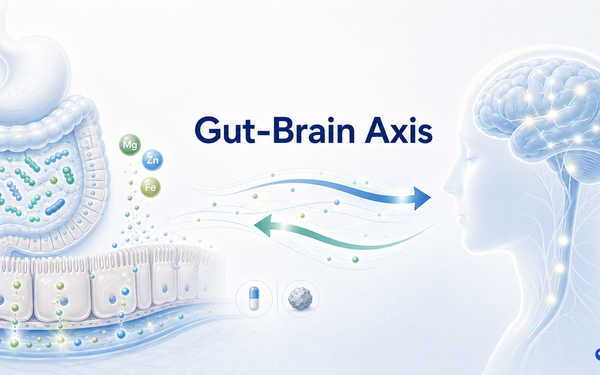
Probiotics and the Gut–Skin Axis
This is the newest but biochemically well-grounded frontier in acne research. The gut microbiome influences the skin through several distinct pathways:
Systemic immune regulation: 70–80% of the body's immune cells reside in the gut (GALT — Gut-Associated Lymphoid Tissue). When the microbiome is dysbiotic, the immune system tends to over-respond to minor triggers — including the bacterial load on the skin.
Androgen clearance via the liver: Certain Lactobacillus strains influence androgen metabolism in the liver — where hormones are inactivated and excreted. Dysbiosis can impair this clearance, contributing to the androgen excess seen in hormonal acne and PCOS.
IGF-1/FoxO1 signaling: An RCT using Lactobacillus rhamnosus SP1 found that after 12 weeks, IGF-1 gene expression in skin fell by 32% and FoxO1 expression (the sebaceous gland "brake") increased by 65% — accompanied by meaningful clinical improvement.
Systemic anti-inflammatory effect: Probiotics increase short-chain fatty acid (SCFA) production — especially butyrate — which exerts anti-inflammatory effects throughout the body, including the skin.
A 2024 meta-analysis of RCTs on probiotics and acne confirmed the strains with the strongest evidence are L. acidophilus, L. rhamnosus, and L. bulgaricus — particularly effective in inflammatory acne presentations.
Magnesium — the overlooked link in hormonal acne
Magnesium does not treat acne directly, but plays an important indirect role through three pathways:
- Cortisol regulation: Magnesium is a cofactor for GABA synthesis and HPA axis modulation. Magnesium deficiency → chronically elevated cortisol → androgen surge → acne flares. This explains why breakouts worsen dramatically during periods of high stress.
- Insulin sensitivity: Magnesium is required for more than 300 enzymatic reactions, including insulin receptor phosphorylation. Deficiency contributes to insulin resistance — the central metabolic driver of hormonal acne and PCOS.
- Anti-inflammatory effect: Magnesium suppresses NF-κB and reduces CRP — a systemic inflammatory marker that correlates with acne severity.
Why External Treatments Are Never Enough on Their Own
Retinoids, topical antibiotics, laser, acid peels — all of these act after the sebaceous gland has already overproduced, after inflammation has already begun. They manage symptoms without reaching the root cause at the hormonal and metabolic level.
This is why hormonal acne comes back on a cycle — not because the skincare products are inadequate, but because the signals triggering the sebaceous glands are still present.
An effective approach needs to address all layers simultaneously:
- Diet: Reduce high-GI foods, limit dairy and whey protein, increase healthy fats (omega-3, olive oil)
- Targeted micronutrient support: Zinc (preferably bisglycinate form), Vitamin D3 (check baseline before supplementing), Omega-3 EPA/DHA at therapeutic doses
- Gut support: Multi-strain probiotics, prebiotic fiber from vegetables
- Cortisol management: Magnesium, consistent sleep, reducing chronic psychological stress
An Important Note
The micronutrients discussed here all have supporting clinical evidence — but none of them is a standalone cure. Hormonal acne is the result of multiple converging factors: genetics, hormones, diet, microbiome, and lifestyle. Effective intervention requires a multi-pronged approach, sustained over 8–12 weeks minimum, and ideally guided by a dermatologist or clinical nutritionist.
Before supplementing — especially with vitamin D and high-dose zinc — it is worth checking baseline serum levels to avoid over-supplementation.
This article synthesizes evidence from JAAD International, Dermatologic Therapy, JEADV, PubMed/NCBI, and peer-reviewed randomized controlled trials. The information is educational in nature and does not replace professional medical advice.