Chronic Fatigue: Identifying the 4 Most Common Micronutrient Deficiencies
Fatigue is one of the most common complaints in clinical medicine - accounting for roughly 20-25% of primary care visits. The first answer is almost always "sleep more" or "take a multivitamin." But if you are already sleeping enough, have been taking a multivitamin for months, and still feel exhausted - the problem likely lies elsewhere.
Persistent fatigue is not a single condition. It can stem from Iron deficiency, from mitochondria lacking enough CoQ10 to synthesize ATP, from insufficient Magnesium to sustain normal nerve conduction and muscle contraction, or from B12 and D3 sitting below their optimal threshold. Each type has a different physiological mechanism, different characteristic symptoms, and a different solution.
The important question is not "am I tired" - it is "which type of fatigue is this."
Distinguishing Chronic Fatigue from Normal Fatigue
Normal fatigue follows a specific trigger - a stressful workday, a hard training session, or a short night of sleep - and improves after one to two days of rest. This is a normal physiological response.
Chronic fatigue is different in nature. It has no clear cause, does not improve after adequate sleep, and persists for more than six consecutive weeks. People with chronic fatigue often describe the feeling as "exhausted the moment they wake up" or "no energy left for ordinary tasks." According to NIH research, 60-70% of chronic fatigue cases have at least one measurable micronutrient deficiency detectable by blood test.
Three criteria to distinguish them:
Duration: Normal fatigue lasts under two weeks. Chronic fatigue persists beyond six consecutive weeks.
Response to rest: Normal fatigue clearly improves with rest. Chronic fatigue does not improve, or improves very little.
Functional impact: Normal fatigue does not significantly affect work performance. Chronic fatigue reduces productivity, concentration, and quality of life.
When fatigue meets the chronic criteria, the next step is classification to identify the correct cause.
The 4 Most Common Types of Chronic Fatigue
Not all fatigue requires the same solution. The four types below have different physiological origins - each requires confirmed testing before any supplementation begins.
Type
Deficiency
Characteristic symptoms
Common in
Tests needed
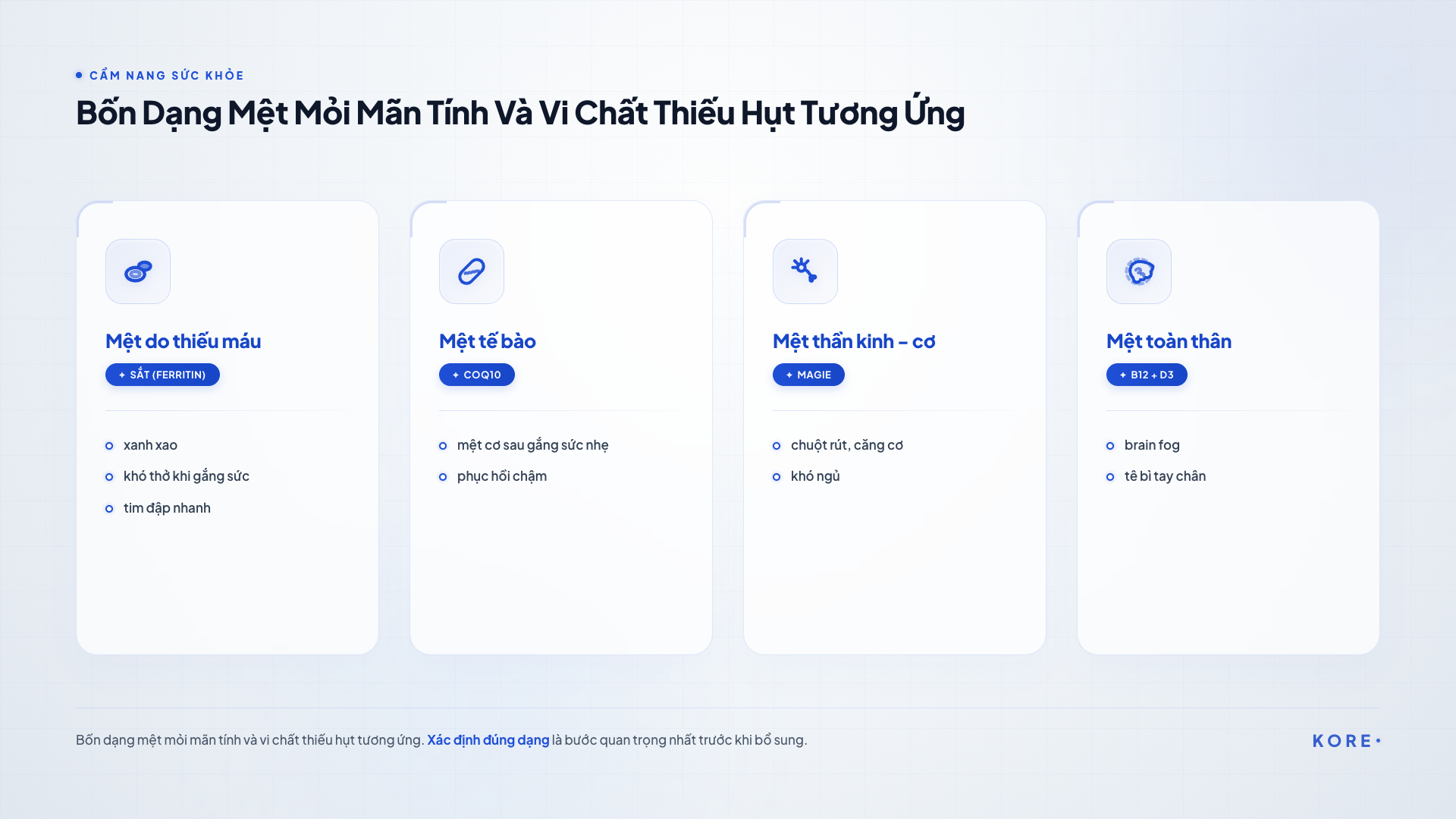
Anemia fatigue
Iron (low Ferritin, low Hemoglobin)
Pallor, breathlessness on exertion, rapid heartbeat, dizziness
Women of reproductive age, vegetarians
CBC, Ferritin, Serum Iron, TIBC
Cellular fatigue
CoQ10 (Coenzyme Q10)
Muscle fatigue after light exertion, unexplained diffuse muscle aching
Fatigue even at rest, brain fog, tingling in hands and feet
Older adults, those with little sun exposure, vegans
Serum B12, 25-OH-D3
Figure 1: The four types of chronic fatigue and their associated micronutrient deficiencies. Correctly identifying the type is the most important step before supplementation.
Iron Deficiency: Fatigue from Oxygen Deprivation at the Cellular Level
Iron is the core component of hemoglobin - the protein responsible for carrying oxygen in red blood cells from the lungs to every tissue in the body. When Ferritin (the marker reflecting stored Iron) drops below 30 µg/L - even when Hemoglobin remains within normal range - the body begins distributing oxygen less efficiently. The result is noticeable fatigue during mild exertion such as climbing stairs or walking briskly, along with an abnormally rapid heartbeat and a sensation of breathlessness.
Iron deficiency is the most common nutritional cause of chronic fatigue globally, affecting approximately 2 billion people according to WHO. Women of reproductive age are particularly vulnerable because monthly menstrual blood loss depletes Iron stores faster than a typical diet can replenish them.
One important detail: Iron deficiency progresses through two distinct stages with different presentations. The first stage - Iron deficiency without anemia - is when Ferritin is low but Hemoglobin remains within normal limits. At this stage, a routine CBC result may return "normal" while the person still experiences fatigue, reduced concentration, and hair loss. Ferritin must be tested separately. The second stage - Iron deficiency anemia - is when both Ferritin and Hemoglobin are low; symptoms are more severe, with pallor, breathlessness, and dizziness on standing.
Figure 2: Normal red blood cells (left) versus Iron-deficient red blood cells (right) - smaller and paler due to reduced hemoglobin.
Supplementing Iron requires testing first to establish the degree of deficiency. Iron bisglycinate is preferred for better absorption and fewer constipation side effects compared to iron sulfate. Iron excess causes liver and cardiac damage - this is a micronutrient that should not be self-supplemented without test results.
CoQ10 Deficiency: Fatigue When Mitochondria Cannot Produce Enough ATP
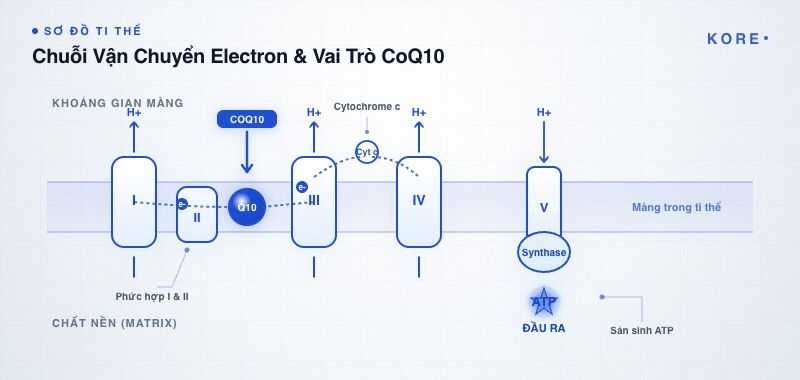
CoQ10 (Coenzyme Q10) is the electron carrier molecule in the mitochondrial respiratory chain - where ATP, the basic energy unit of every cell, is synthesized from glucose and oxygen. Without sufficient CoQ10, the electron transport chain operates inefficiently and less ATP is produced, even when the body has adequate raw materials.
ATP is the direct energy source for every cellular process: the heartbeat, muscle contraction, neuronal signaling. A deficit of ATP at the mitochondrial level explains why CoQ10-related fatigue is not tied to heavy exertion. Those affected feel muscle fatigue after ordinary tasks such as a 15-20 minute walk or climbing one flight of stairs.
CoQ10 levels in the body decline naturally by approximately 65% between age 20 and age 80 (Mortensen et al., JACC Heart Failure 2014). Beyond age, three groups carry particularly high risk. Statin users - on one of the most widely prescribed cholesterol-lowering drug classes - are directly affected because statins inhibit the mevalonate pathway, which is shared by both Cholesterol and CoQ10 synthesis. Research shows statins can reduce CoQ10 by 40-50%. Adults over 40 and those engaging in high-intensity training are also groups that warrant attention.
The distinguishing feature of CoQ10 deficiency is noticeable muscle fatigue after light exertion, slow recovery following training, and diffuse muscle aching with no other identifiable cause. Plasma CoQ10 testing is less common but remains the only way to confirm the diagnosis.
Figure 3: The mitochondrial electron transport chain - CoQ10 is the central link in ATP synthesis.
Magnesium Deficiency: Fatigue from Impaired Neuromuscular Function
Magnesium is involved in over 300 enzyme reactions in the body, including multiple steps in the Krebs cycle and ATP synthesis. When Magnesium is insufficient, energy production efficiency drops and neuromuscular transmission is simultaneously disrupted. According to the European Journal of Clinical Nutrition (2018), 70% of adults in developed countries do not reach the RDA for Magnesium (320-420 mg per day).
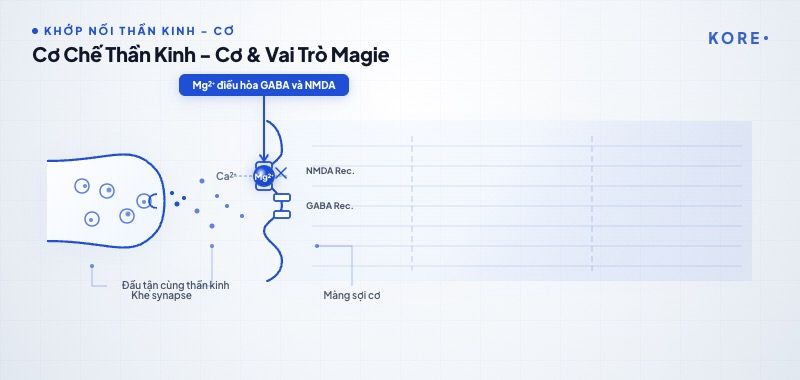
Fatigue from Magnesium deficiency has a recognizable pattern when assessed as a whole. Beyond fatigue, those with low Magnesium typically experience muscle tension in the shoulders, neck, and temples; muscle cramps - especially at night or after light activity; anxiety and low-grade stress that is difficult to explain, because Magnesium regulates GABA and NMDA receptors in the central nervous system; pulsating headaches that frequently appear in the afternoon; and difficulty reaching deep sleep despite adequate hours (see also sleep-micronutrients).
This combination - fatigue alongside muscle tension and sleep disruption - is the hallmark pattern of Magnesium deficiency, and distinguishes it from Iron deficiency (fatigue with breathlessness and rapid heartbeat) or CoQ10 deficiency (purely muscular fatigue after exertion).
Standard serum Magnesium testing is poorly sensitive because only 1% of the body's Magnesium circulates in blood. Red blood cell Magnesium (RBC Mg) is more accurate but less widely available. For supplementation, magnesium bisglycinate absorbs approximately 3 times better than the oxide form and causes fewer digestive side effects than citrate at higher doses.
Figure 4: Mg²⁺ regulates neuromuscular signaling through GABA and NMDA receptors. Magnesium deficiency disrupts the entire signaling cascade.
B12 and Vitamin D3 Deficiency: Systemic Fatigue and Brain Fog
B12 and Vitamin D3 affect energy through different mechanisms but are frequently deficient simultaneously, producing a form of diffuse, whole-body fatigue that is difficult to attribute to any single cause.
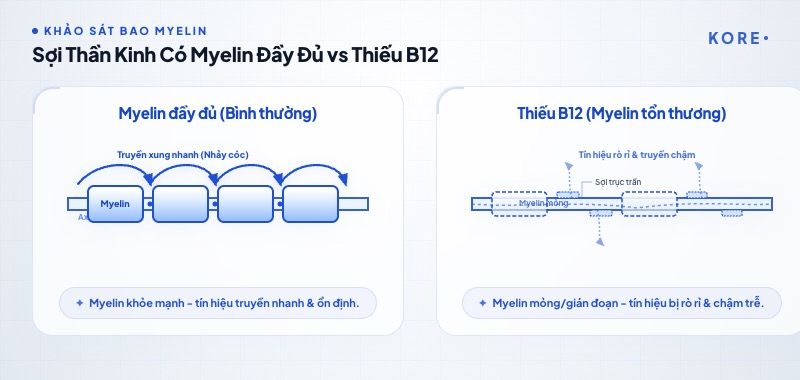
Vitamin B12 is required for myelin synthesis - the protective sheath around nerve fibers - and for normal red blood cell production. When B12 is deficient, nerve conduction slows, red blood cell production decreases, and the person experiences fatigue alongside brain fog, tingling in the hands and feet, and short-term memory impairment (Green et al., Nature Reviews Disease Primers 2017). The only natural dietary sources of B12 are animal products - meat, eggs, dairy, and seafood. Those who eat little meat, older adults whose stomachs secrete less acid reducing B12 absorption, and people on long-term Metformin carry elevated risk.
Vitamin D3 functions more like a hormone than a conventional vitamin - D3 receptors are present in skeletal muscle, the immune system, and the brain. D3 deficiency causes diffuse fatigue, vague bone and muscle aches, and impaired immune function (Holick, NEJM 2007). Despite abundant sunlight in many regions, modern lifestyles - extended time indoors, covering clothing, and sunscreen use - substantially reduce cutaneous D3 synthesis.
Figure 5: A nerve fiber with intact myelin (left) versus B12-deficient myelin - thinner and interrupted, slowing signal transmission.
Which Tests to Run When Chronic Fatigue Is Suspected
Testing before micronutrient supplementation is most critical for Iron - due to the risk of toxic accumulation in excess - and for B12 to determine the degree of deficiency and select the appropriate dose. For Magnesium and CoQ10, the toxic threshold is very high and difficult to reach through supplements, but testing is still useful for monitoring supplementation effectiveness.
A basic panel for chronic fatigue includes:
Complete Blood Count (CBC): Checks for anemia and classifies red blood cell type.
Ferritin: The Iron reserve marker - more diagnostically important than Hemoglobin for early-stage deficiency.
Serum B12 and Folate: B12 deficiency causes fatigue and nerve damage if not detected early.
25-OH-Vitamin D3: Widespread deficiency with broad effects across multiple organ systems.
TSH (Thyroid Stimulating Hormone): Hypothyroidism is a frequently missed cause of chronic fatigue.
Fasting blood glucose: To rule out prediabetes or reactive hypoglycemia.
Do not self-supplement Iron without a Ferritin test result.
Interactions Between Micronutrients When Supplementing Together
Combining multiple micronutrients requires awareness of absorption and metabolic interactions between them. Key interactions to know:
Iron and Calcium compete for the same absorption channel in the small intestine - taking both at the same time reduces the absorption efficiency of each. Iron should be taken separately from meals containing dairy or Calcium-rich foods. By contrast, Vitamin C (ascorbic acid) enhances non-heme Iron absorption - the form found in plant sources - by up to 3 times when taken together.
Magnesium and Vitamin D3 have a mutually dependent relationship: D3 requires Magnesium to be converted into its active form (1,25-OH-D3) in the kidneys. Those with Magnesium deficiency who supplement D3 without simultaneously addressing Magnesium may benefit less than expected from D3 supplementation.
CoQ10 is fat-soluble and requires dietary fat for absorption - taking CoQ10 with a fat-containing meal is the simplest way to improve uptake. B12 does not compete with any other micronutrient and can be taken at any time of day.
See also: magnesium-deficiency-by-group for symptoms by population group. And leg-cramps-electrolytes for the mechanism behind cramps related to electrolyte imbalance.
Frequently Asked Questions
Is chronic fatigue a disease?
Chronic fatigue is a symptom, not a standalone disease. It can be a manifestation of micronutrient deficiency, thyroid dysfunction, diabetes, depression, or Myalgic Encephalomyelitis/Chronic Fatigue Syndrome (ME/CFS). Distinguishing between these requires blood tests and clinical evaluation.
I am taking a multivitamin but still feel exhausted - why?
Multivitamins typically contain low doses and poorly absorbed forms. Magnesium oxide has a bioavailability of approximately 4%, while bisglycinate exceeds 80%. The cyanocobalamin form of B12 is less effective than methylcobalamin for individuals with MTHFR gene variants. Additionally, CoQ10 deficiency is not addressed by any standard multivitamin formula.
How long before supplementation shows results?
Iron: 2-4 weeks for symptom improvement; 3-6 months to fully restore Ferritin reserves.
Magnesium: 2-4 weeks for improved sleep and reduced muscle tension.
CoQ10: 4-8 weeks to notice clear energy improvement.
B12 and D3: 4-8 weeks, depending on the initial degree of deficiency.
Can a normal diet still result in micronutrient deficiency?
Yes. Modern agricultural soils have been depleted of minerals after decades of intensive cultivation. A University of Texas study (2004) comparing vegetable nutrient content between 1950 and 1999 found Magnesium had declined 27%, Calcium 16%, and Iron 37%. Even a "balanced" diet by contemporary standards may not provide sufficient amounts of certain micronutrients.
Do Magnesium and Iron deficiency share the same symptoms?
There is overlap, but the two can be distinguished. Iron deficiency is characterized by pallor, breathlessness on exertion, and rapid heartbeat. Magnesium deficiency is characterized by cramps, muscle tension, anxiety, and poor sleep. Individuals with both conditions - not uncommon in women of reproductive age - need to test for both to identify the correct supplementation approach.
What should pregnant individuals do about chronic fatigue?
Pregnant individuals should follow scheduled prenatal testing, which routinely includes Ferritin, CBC, B12, and D3. Do not self-supplement any micronutrient outside of guidance from an obstetric provider - including those that seem harmless, such as Magnesium.
Can men experience fatigue from Iron deficiency?
Yes, though less commonly than women. In men, the cause is typically a low-meat diet, occult gastrointestinal bleeding (colonic polyps, gastric ulcers), or poor absorption. Iron deficiency in men warrants more thorough investigation of underlying causes due to a higher likelihood of an internal bleeding source.
Medical disclaimer: Content is educational and is not a substitute for medical advice. Chronic fatigue has many causes and should be evaluated by a physician to rule out serious conditions (hypothyroidism, severe anemia, cardiovascular disease, depression, cancer). Do not self-supplement Iron without a test result - Iron excess causes liver and cardiac damage. Consult a professional before changing your supplement regimen.
References
World Health Organization (WHO). (2023). Anaemia. WHO Global Health Observatory.
Camaschella, C. (2015). "Iron-deficiency anemia." New England Journal of Medicine, 372(19), 1832-1843.
Mortensen, S.A. et al. (2014). "The effect of coenzyme Q10 on morbidity and mortality in chronic heart failure." JACC Heart Failure, 2(6), 641-649.
Rosique-Esteban, N. et al. (2018). "Dietary Magnesium and cardiovascular disease." Nutrients, 10(2), 168.
Green, R. et al. (2017). "Vitamin B12 deficiency." Nature Reviews Disease Primers, 3, 17040.
Holick, M.F. (2007). "Vitamin D deficiency." New England Journal of Medicine, 357(3), 266-281.
Davis, D.R. et al. (2004). "Changes in USDA food composition data for 43 garden crops, 1950 to 1999." Journal of the American College of Nutrition, 23(6), 669-682.
National Institutes of Health (NIH). (2023). Magnesium - Fact Sheet for Health Professionals. Office of Dietary Supplements.
Bạn có đang uống Omega-3 đúng cách? Cách tính độ tinh khiết và chọn sản phẩm chuẩn khoa học
Một viên dầu cá 1.000mg có thể chỉ chứa 300mg omega-3 thật. Hướng dẫn tính tỷ lệ omega-6/omega-3, nhận diện dầu cá bị oxy hóa, và checklist chọn sản phẩm dựa trên bằng chứng, không phải nhãn quảng cáo.
Nhãn thực phẩm chức năng: đọc gì, bỏ qua gì, và vì sao FDA không đảm bảo chất lượng
FDA không kiểm định chất lượng thực phẩm chức năng trước khi bán ra thị trường. Hướng dẫn đọc bảng Supplement Facts, nhận diện tá dược cần tránh, và checklist 5 bước kiểm tra một thương hiệu, dựa trên bằng chứng.
Gut-brain axis: tại sao hấp thụ vi chất phụ thuộc tiêu hóa
Đường ruột khỏe mạnh quyết định bao nhiêu % vi chất bạn hấp thụ. Hiểu gut-brain axis, vai trò probiotic và tại sao dạng chelate vượt trội khi tiêu hóa yếu.