

Only in Vietnamese
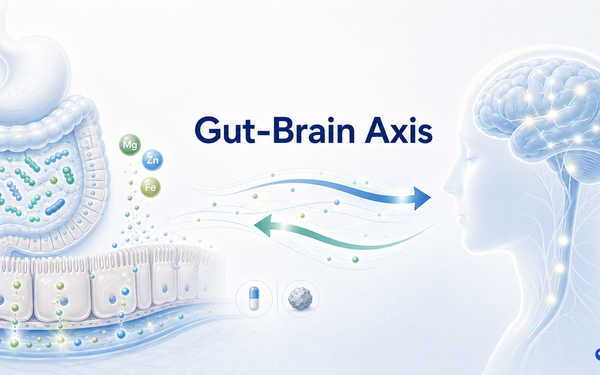
Gut-brain axis: tại sao hấp thụ vi chất phụ thuộc tiêu hóa
Đường ruột khỏe mạnh quyết định bao nhiêu % vi chất bạn hấp thụ. Hiểu gut-brain axis, vai trò probiotic và tại sao dạng chelate vượt trội khi tiêu hóa yếu.
"Poor sleep" is a common complaint, but few people stop to ask: poor in what way, exactly?
Some people lie down and toss for an hour or two before sleep arrives. Others fall asleep easily but wake at 3 a.m. staring at the ceiling until 5. Still others are up at 5 a.m., an hour earlier than planned, still tired but unable to drift back off.
These three scenarios look similar on the surface. Inside the body, the mechanisms are quite different. And because they differ, so do the approaches.
This article introduces the clinical framework for classifying poor sleep, what may be happening in the body for each type, and the main categories of causes worth considering. This is the opening piece in KORE's sleep content series; follow-up articles go deeper into each cause group.
The DSM-5 (Diagnostic and Statistical Manual of Mental Disorders) and ICSD-3 (International Classification of Sleep Disorders) divide insomnia into three primary symptom groups based on when during the night the problem occurs:
1. Sleep-Onset Insomnia: You lie down but cannot fall asleep for more than 20–30 minutes. This is the type most people recognize.
2. Sleep-Maintenance Insomnia: You fall asleep but wake one or more times during the night. You may or may not be able to return to sleep.
3. Early Morning Awakening (Terminal Insomnia): You wake at least 30 minutes earlier than intended and cannot go back to sleep, even though you still feel tired.
A person can experience one, two, or all three simultaneously. But identifying which type dominates helps point toward the right underlying cause.
Sleep begins when the brain reduces excitatory activity and increases inhibition. Two central factors are GABA (the brain's primary inhibitory neurotransmitter) and melatonin (the hormone that signals darkness to the body).
When cortisol, the stress hormone, remains elevated into the evening, it directly competes with both. The result is a brain that cannot "switch off" even when the body is exhausted.
Magnesium plays a dual role in this process. It acts as a natural GABA agonist, helping the nervous system shift into an inhibitory state, and as an NMDA receptor antagonist, reducing excessive glutamate-driven excitation.
A double-blind placebo-controlled trial in older adults (Abbasi et al., 2012, PMC3703169) found that 500 mg magnesium daily for 8 weeks reduced sleep-onset latency, raised serum melatonin, and lowered cortisol. A subsequent systematic review and meta-analysis (PMC8053283) confirmed that magnesium shortened sleep-onset time by an average of 17.36 minutes compared to placebo.
Vitamin D is also implicated, indirectly, through its role in regulating serotonin, a precursor to melatonin. Prolonged vitamin D deficiency may disrupt the sleep-wake cycle downstream.
Before considering micronutrients or hormones, screen for environmental contributors: screen light before bed (suppresses endogenous melatonin), a bright sleeping environment, noise, room temperature above 20°C, or caffeine consumed after 2 p.m.
This is the most complex type because the likely cause varies significantly depending on what time the waking occurs.
Waking around midnight or 1 a.m.: Early night is when deep sleep (NREM stage 3) is most concentrated. Waking at this hour often involves muscle cramps, restless legs, or pain. Magnesium and calcium deficiency may contribute to involuntary muscle contractions during this phase.
Waking between 2 and 4 a.m.: This is the most complex window. Several mechanisms may be operating simultaneously:
Waking between 4 and 6 a.m.: This phase is sometimes confused with type 3 (early morning awakening), but the mechanism is similar: cortisol is near its circadian peak. In those with an abnormal cortisol awakening response, the threshold for waking is markedly lower during this window.
This depends on the level of arousal at the moment of waking. If cortisol has not risen significantly and the waking was incidental, most people can return to sleep within 15–20 minutes. If the mind activates, worry sets in, or cortisol is already elevated, the ability to return to sleep drops sharply.
The Cortisol Awakening Response (CAR) is the natural increase of 38–75% in cortisol within 30–45 minutes of waking, which helps the body mobilize for the day (Endocrine Reviews, 2024). This is a normal component of the circadian rhythm.
In individuals with HPA axis dysregulation, however, CAR can occur earlier than expected, pulling waking forward with it. Those with chronically elevated evening cortisol tend to have a lower arousal threshold throughout the night, particularly during the rising phase of the cortisol curve.
Early morning awakening is a diagnostic criterion for major depressive disorder in the DSM-5. This does not mean everyone who wakes early is depressed, but when the symptom accompanies low mood, loss of interest, or a heavy feeling on waking, it warrants further evaluation.
In perimenopausal and menopausal women, declining estrogen and progesterone reduce slow-wave sleep quality and increase the frequency of nocturnal and early-morning awakenings. Progesterone has a mild sedative effect through GABA-A receptors; as levels fall, that effect is lost.
A key principle: before attributing poor sleep to micronutrients or hormones, rule out external factors with direct impact on sleep.
External (environmental):
Internal (within the body):
| Type | Main symptom | Common cause groups |
|---|---|---|
| Difficulty falling asleep | Lying awake >30 minutes | Evening cortisol, magnesium deficiency, low melatonin, anxiety |
| Waking during the night | 1–3 awakenings, hard to return to sleep | Iron deficiency (RLS), low blood glucose, early cortisol rise, magnesium deficiency |
| Early morning awakening | Waking ≥30 min early, unable to return | HPA axis dysregulation, depression, estrogen imbalance |
This table is not a diagnostic tool. Causes often overlap, and accurate identification requires evaluation by a qualified clinician.
This article is the introduction. Upcoming KORE content will go deeper into each area:
To read more about a specific area, see magnesium and sleep or sleep phases and the role of micronutrients.
Content is educational and not a substitute for medical advice. Consult a professional before changing your supplement regimen.
References:
Đường ruột khỏe mạnh quyết định bao nhiêu % vi chất bạn hấp thụ. Hiểu gut-brain axis, vai trò probiotic và tại sao dạng chelate vượt trội khi tiêu hóa yếu.
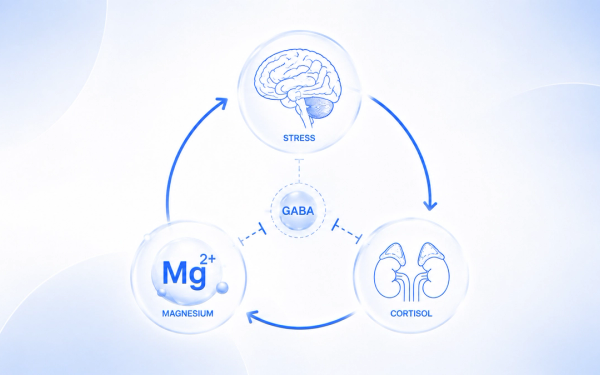
Stress mãn tính làm cơ thể tiêu thụ Magie nhanh gấp đôi. Hiểu cơ chế cortisol - GABA - Magie để giải thích tại sao căng thẳng kéo dài gây thiếu khoáng chất.

Mất ngủ khi mang thai không chỉ do bụng lớn hay đi tiểu đêm. Thiếu Magie và Vitamin D là hai yếu tố ít được nhắc tới nhưng có cơ chế rõ ràng. Bài này giải thích tại sao giấc ngủ thai kỳ bị phá vỡ, hai vi chất này liên quan thế nào, và giới hạn liều an toàn cần biết trước khi bổ sung.